

Advert
Stop Inhaling Pollen: A Smarter Way to Manage Seasonal Allergies
Every spring, the routine begins.
You check the pollen count.
You brace yourself for what’s coming.
You take an antihistamine — sometimes before symptoms even start.
And yet, on high-pollen days, the sneezing and tears still break through — sometimes within minutes of stepping outside.
Here’s the uncomfortable truth:
Most allergy management starts after exposure has already happened.
Pollen doesn’t trigger symptoms from across the street. It triggers them when you inhale it.
So what if the smarter strategy isn’t just managing the reaction — but reducing what you breathe in the first place?
The Exposure Problem
Tree pollen, grass pollen, mold spores, pet dander — these particles are microscopic. You can’t often see them floating in the air. But during peak season, you can easily inhale thousands every hour.
Even if you:
The moment you step outside — walking the dog on a breezy morning, gardening during peak bloom, or commuting with windows cracked — exposure begins again.
Allergen avoidance has long been recognized as the first-line defense in allergy management. The European Centre for Allergy Research Foundation (ECARF) emphasizes exposure reduction as foundational.
The problem is simple:
Total avoidance isn’t realistic.
Why Medication Isn’t the Whole Answer
Antihistamines and sprays suppress your body’s response after allergens enter your system.
They don’t block particles from reaching your breathing zone.
They manage the aftermath.
For many people, relief feels partial. Some experience drowsiness, dry mouth, or brain fog. Others increase dosage during peak days.
But if pollen exposure is the trigger, reducing exposure changes the equation.
That’s where personal air protection enters the conversation.
A New Approach: Personal HEPA Protection
Room air purifiers clean the air in a space.
Personal air purifiers focus on cleaning the air that you breathe.
Respiray Wear A+ is a wearable HEPA air purifier designed to reduce allergen exposure directly at the source — your breathing zone.
Instead of filtering an entire room, it focuses on one critical area: the air entering your nose and mouth.
Designed to sit comfortably and discreetly below the face, it blends into everyday settings — many users wear it while commuting, working, or spending time outdoors without it drawing attention.
How It Works
1 Air Is Pulled In From Below
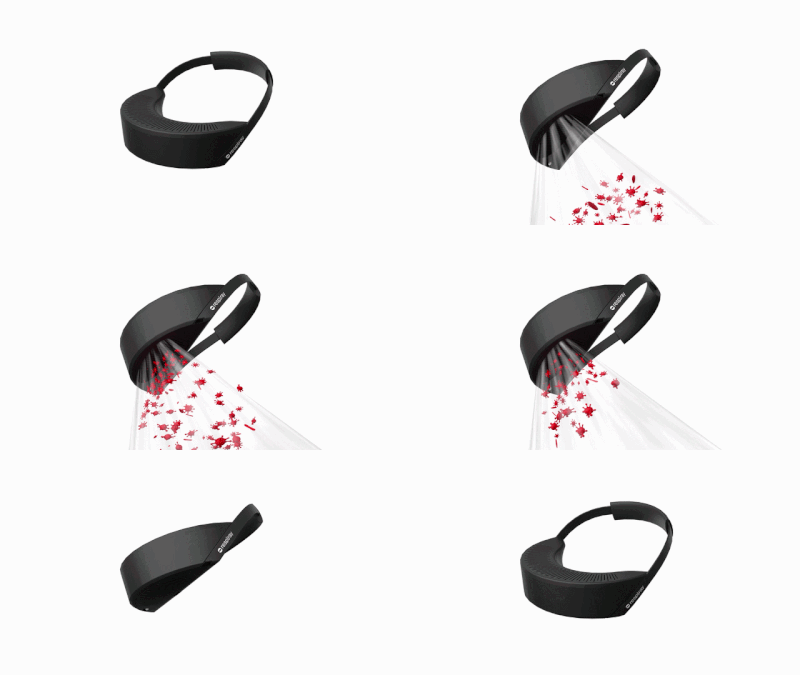
The device gently draws in surrounding air from beneath the unit.
2 HEPA Filtration Captures Particles
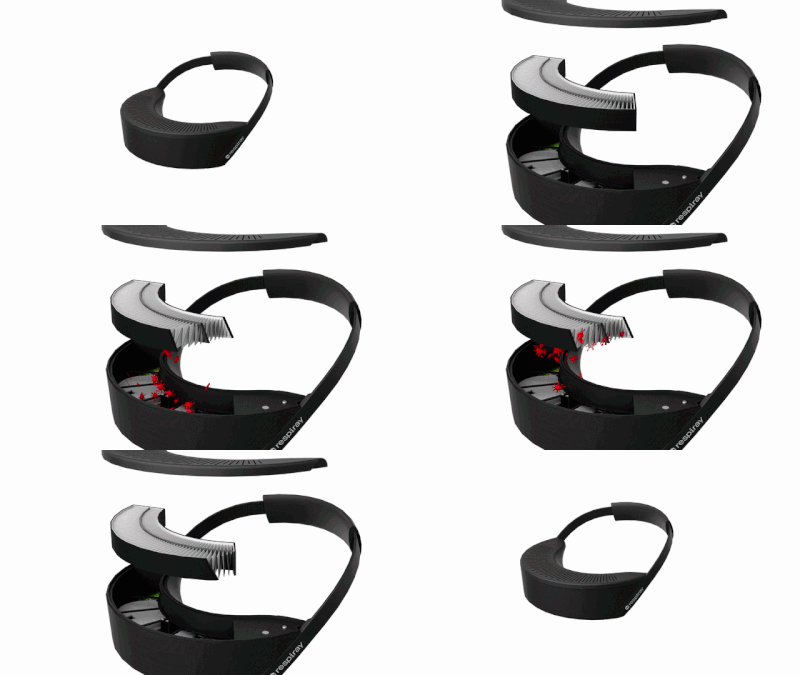
A certified H12 HEPA filter (lab-tested by SGS North America) captures 99.9% of airborne particles (=1 micron) — including pollen and other allergens.
3 Clean Air Is Directed Upward
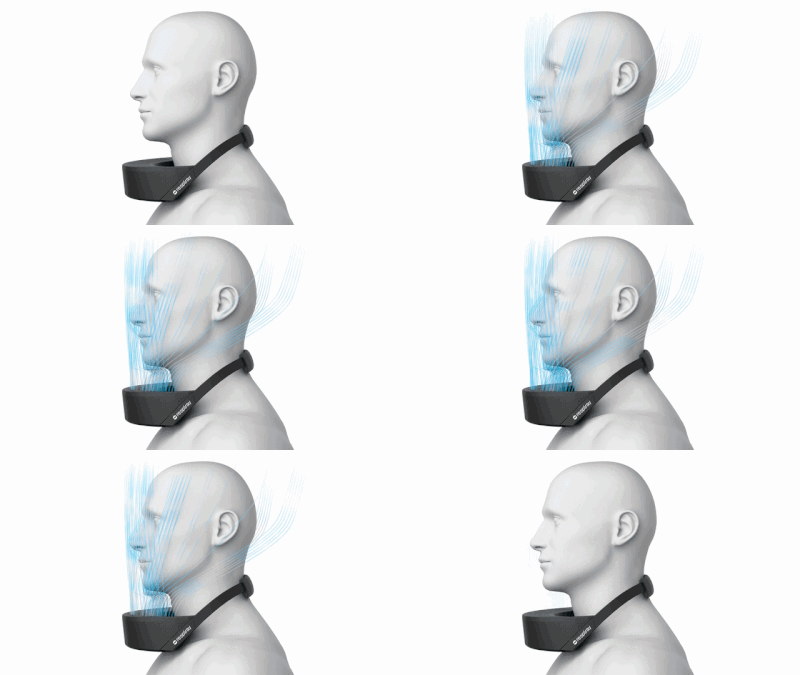
Using laminar airflow technology, a steady stream of filtered air flows upward, creating a localized clean-air zone around your nose and mouth.
It starts working immediately when powered on.
Instead of trying to clean the whole world, it filters the air that matters most — the air you inhale.
What Did Clinical Testing Show?
In a controlled allergen exposure trial conducted by the European Centre for Allergy Research Foundation (ECARF), allergy sufferers wore Wear A+ while exposed to common triggers like birch pollen, dust mites, and cat dander.
The results:
Nearly half the typical nasal and eye symptoms — reduced by filtering the air before it’s inhaled.
For many participants, that translated into less sneezing, less watery eyes, and fewer interruptions to everyday activities during allergen exposure. You can explore the full clinical findings here.
“If It Really Worked, Everyone Would Use It.”
New technology often sounds unfamiliar at first.
But wearable HEPA protection is already used daily by allergy sufferers across all 50 states and has been clinically evaluated by independent allergy researchers — a number that continues to grow each season. Learn more about how the technology works.→

Clinical trials conducted by ECARF concluded that Wear A+ can be recommended as a non-drug protection option for airborne allergies.
And it’s backed by a 60-day money-back guarantee.
Stop Inhaling Pollen
For decades, allergy management has focused on reacting to symptoms.
Reducing exposure before symptoms begin may be the missing layer many allergy sufferers haven’t considered — whether it’s walking your dog at sunrise, attending a spring baseball game, or visiting friends with pets.
If you’re tired of bracing yourself every morning…
If you want protection that works before the reaction starts…
Wear A+ is now back in stock for the start of allergy season — and early demand is already building as more people prepare ahead of peak pollen weeks.
For Pollen.com readers, the Spring offer (save up to 40%) is available here while current inventory lasts.
See how wearable HEPA protection works — and secure the seasonal offer while it’s available.
Sometimes the smartest strategy is the simplest:
Stop inhaling pollen.
Date Published: 3/5/2026 12:00:00 AM
Related Articles
Search Allergy Articles
Seasonal Allergies Might Increase Suicide Rate, Study Says
Antibiotics Might Increase Risk of Childhood Asthma, Allergies
Five New Year's Resolutions to Help You Breathe Easier
Mothers' Milk Might Be Key To Avoiding Childhood Food Allergies